
Decision Made
Make complex, multi-layered decisions for travelers
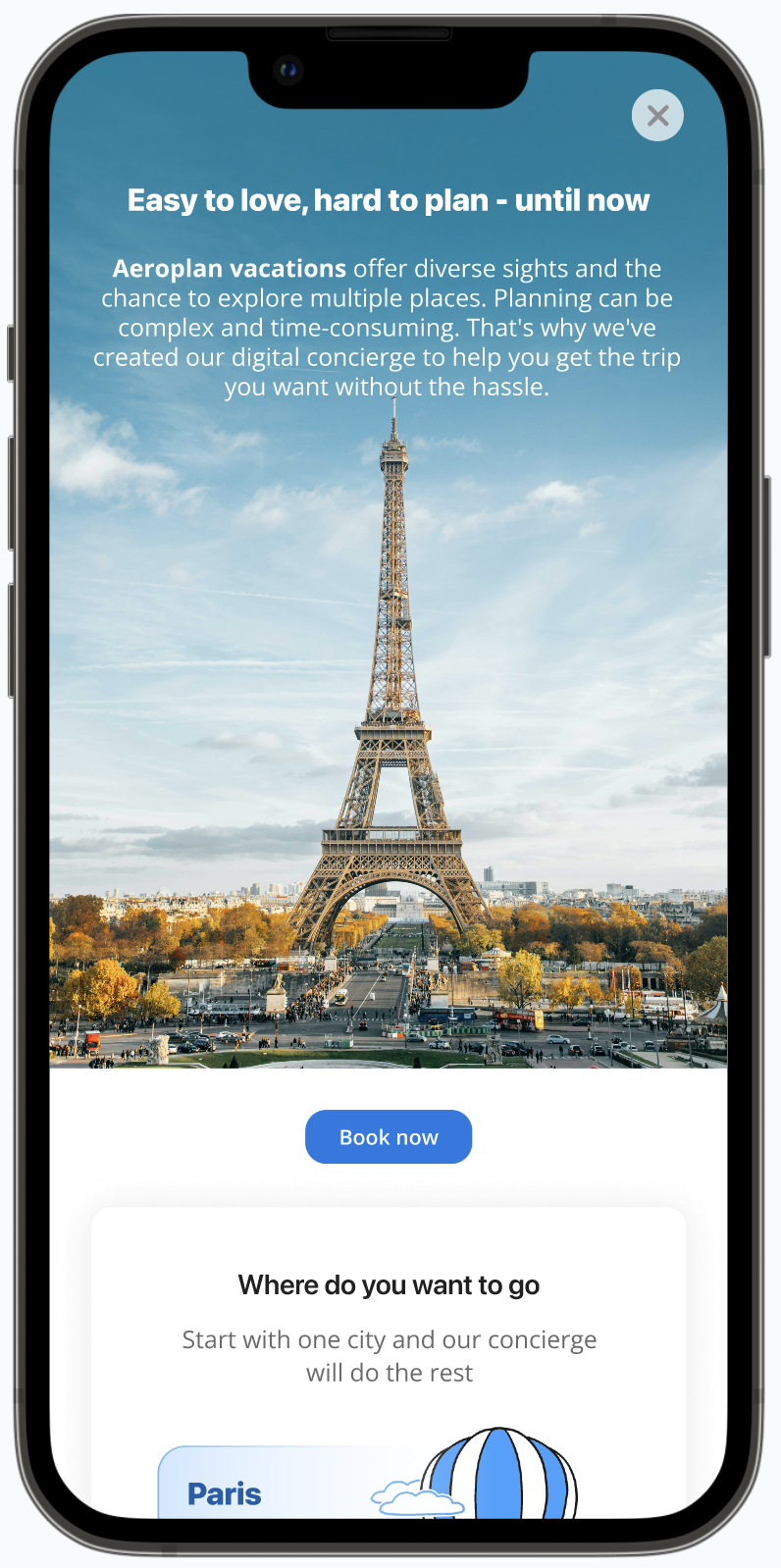
AI travel assistant
〰️
AI travel assistant 〰️

Vision
Decision Made will offer reliable, relevant options that make complicated decisions simple and clear, saving travelers time throughout their journey (before, during, and after their trips).
Objective
Pilot a decision made concierge concept to serve a small number of customers, validate the problem, and discover the true potential of the product
Understanding the problem
In our research, we found out that our members need help crafting and coordinating the most interesting multi-destination trips.
Key Numbers
29% need help organizing and planning flight for more than one destination.
26% Need help recommending unique local experiences.
We leveraged the Design Sprint Process to help with the following two key outcomes. Refine problem statement and prioritize pain-points. Test Concepts and identify top concept.
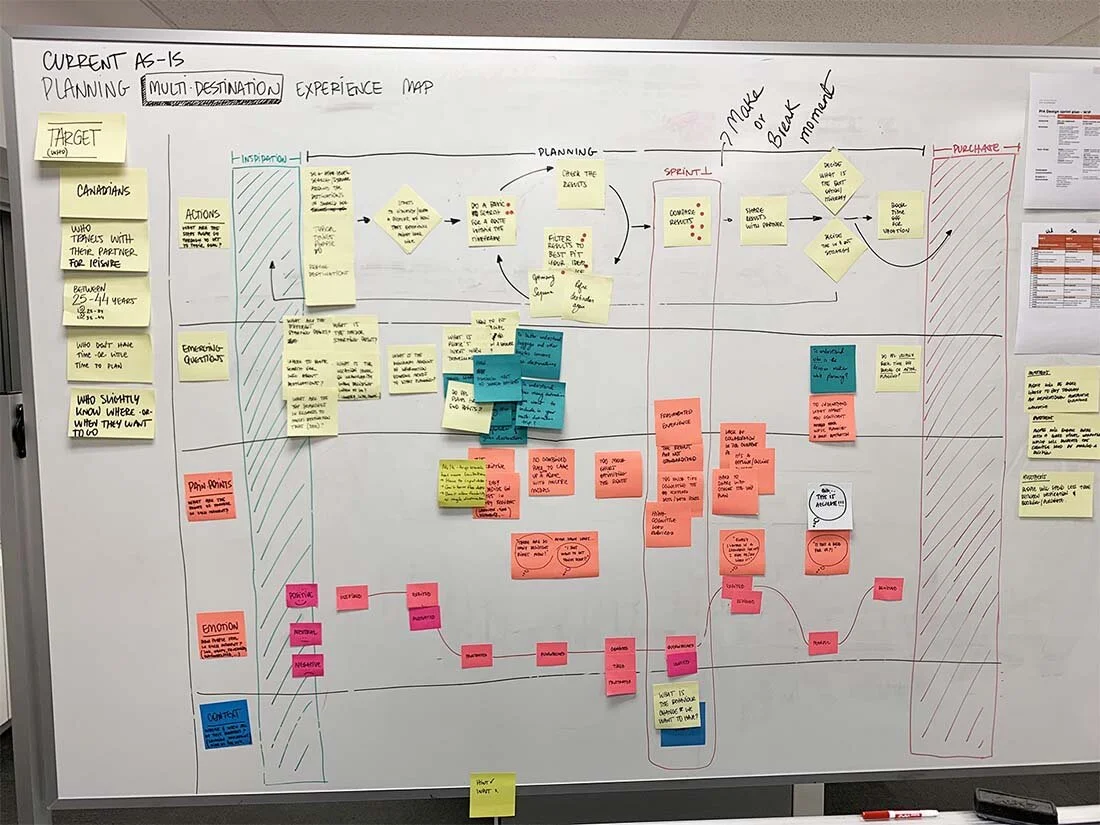
We started off by running an empathy and experience mapping workshop. The main goal was to understand the make or break moments during the potential planning phase of a traveller. The framework was divided in to four main section: Actions, emerging questions, pain points and emotions. We ran this workshop with 7 people we have recruited based on our personas.
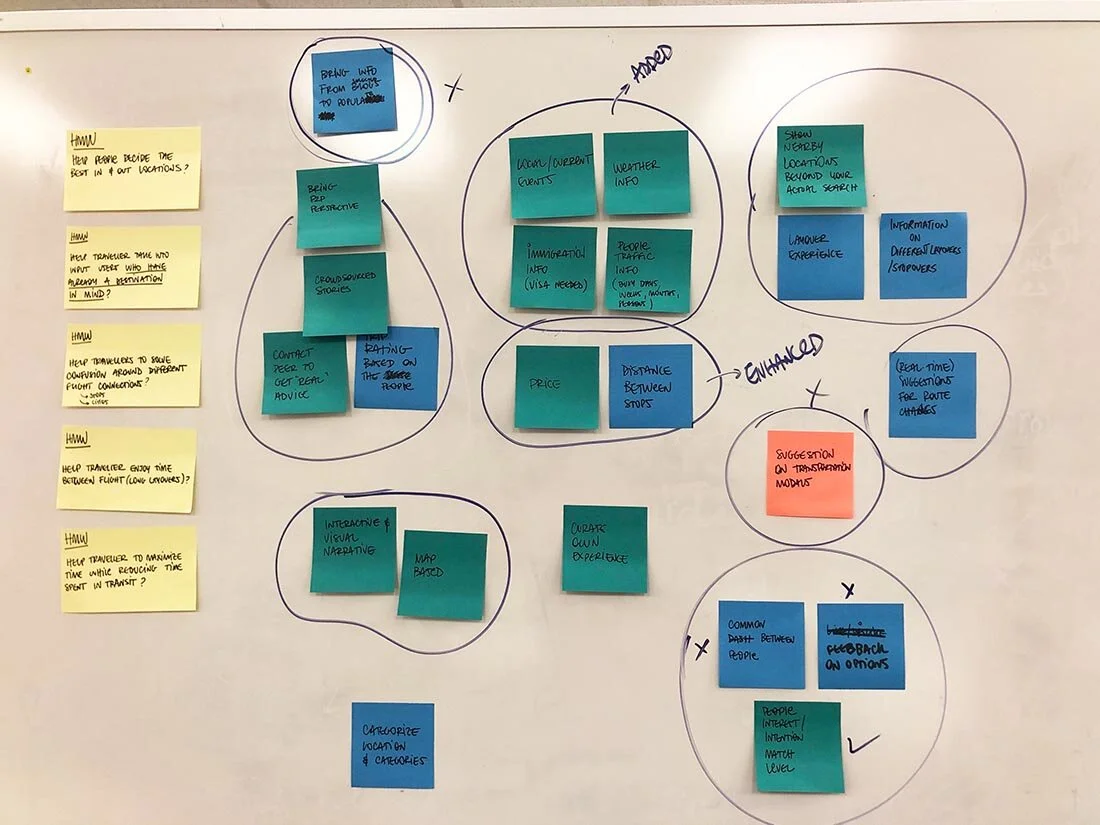
After the workshop, we did a simple ‘how might we’ exercise. The goal was to come up with as many as HMW as we can based on the results we received from experience mapping workshop. Once all the HMW were on the board, we did a quick vote on the ideas we feel we can tackle in design sprints based on current bandwidth and technology.
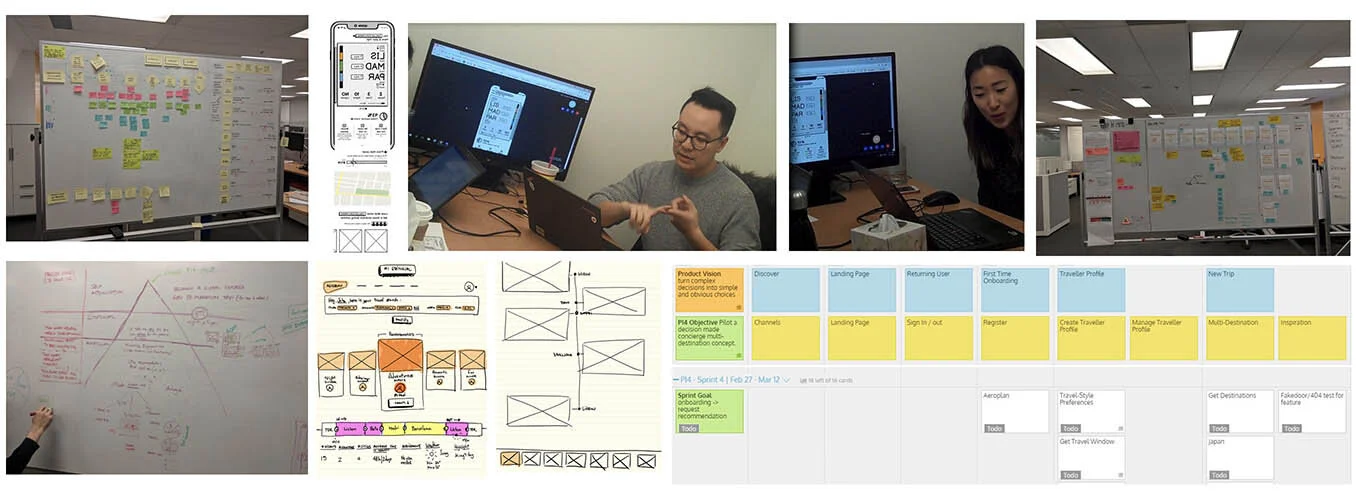
4x Design sprints. 2 Key pain points. 10 Interviews
Using design sprints we mapped the reframed problem statements and pain points to customer needs and potential solution features.
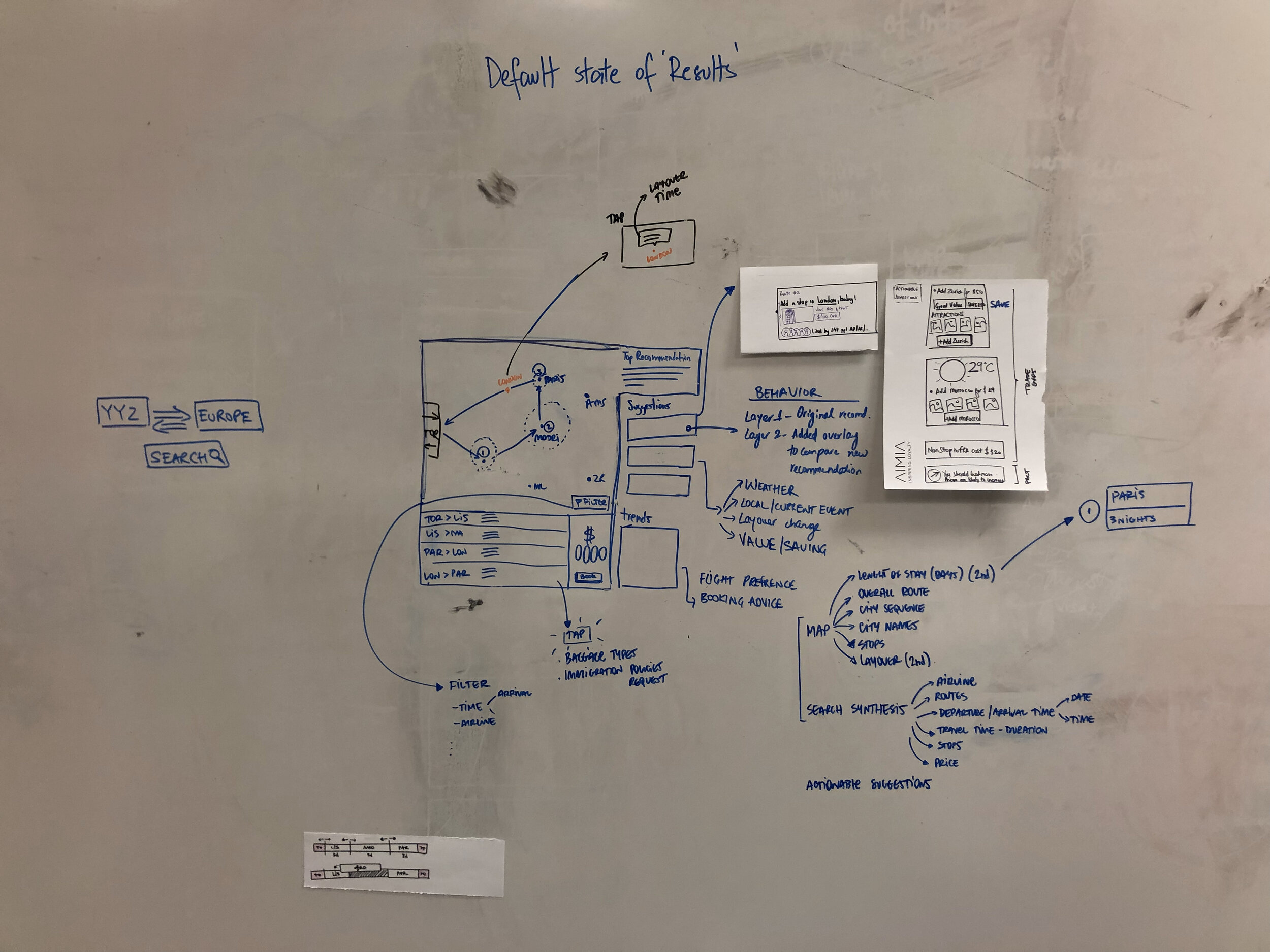
Reframe problem and pain point
Searching requires a lot of effort. The search process is demanding and requires significant effort to yield the desired outcome.
Results are generic and do not immediately align with travelers' values and interests.
Lack of confidence in optimizing time spent in a city. Consumers are unsure about the ideal duration of stay in a particular destination.
Time-consuming and complex process of comparing, analyzing, and optimizing. The permutations for multi-destination trips require mental calculations and/or custom evaluation workflows and frameworks (such as tabs, Excel, and printouts).
Customer needs
Flexibility in searching that feels natural (e.g. conversational rather than transactional).
Results that align with their value systems and interests.
Suggestions on the best use of time at a given location based on value systems and interests.
Comparison and optimization of results tailored to their needs, value systems, and requirements.
Potential solution feature
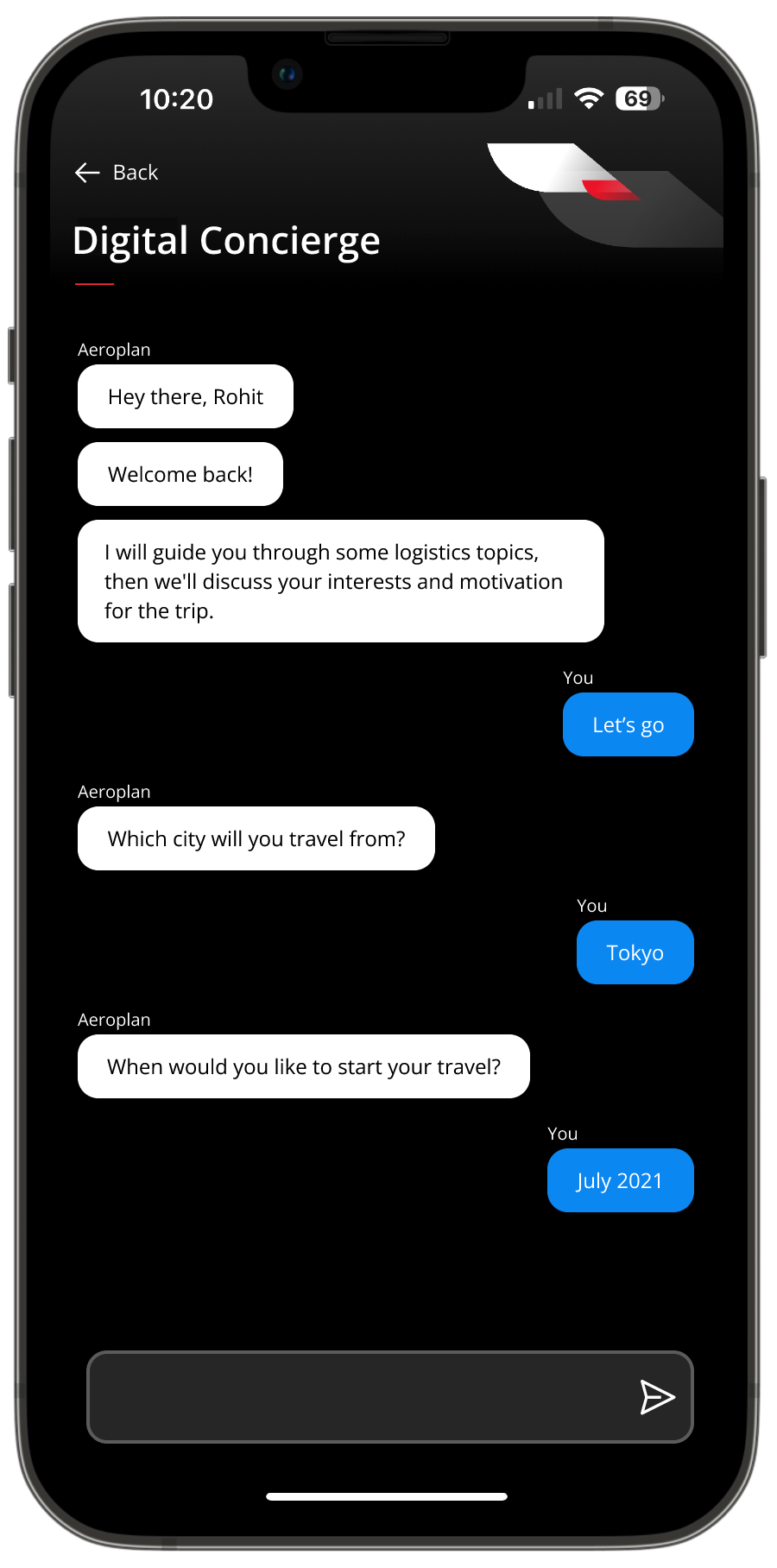
Conversational interface
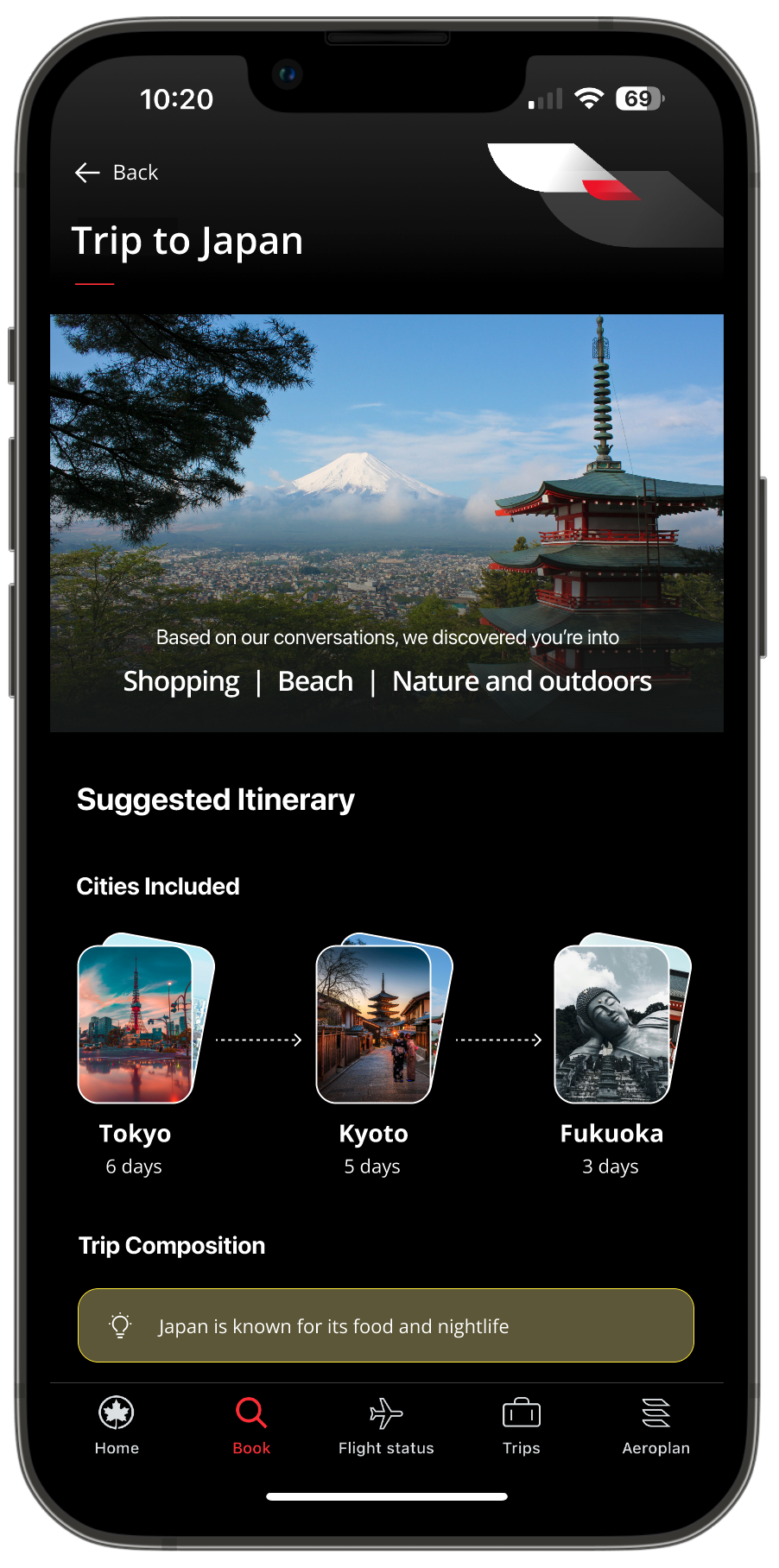
Style & preference profile to understand the consumer to provide value based recommendations/results
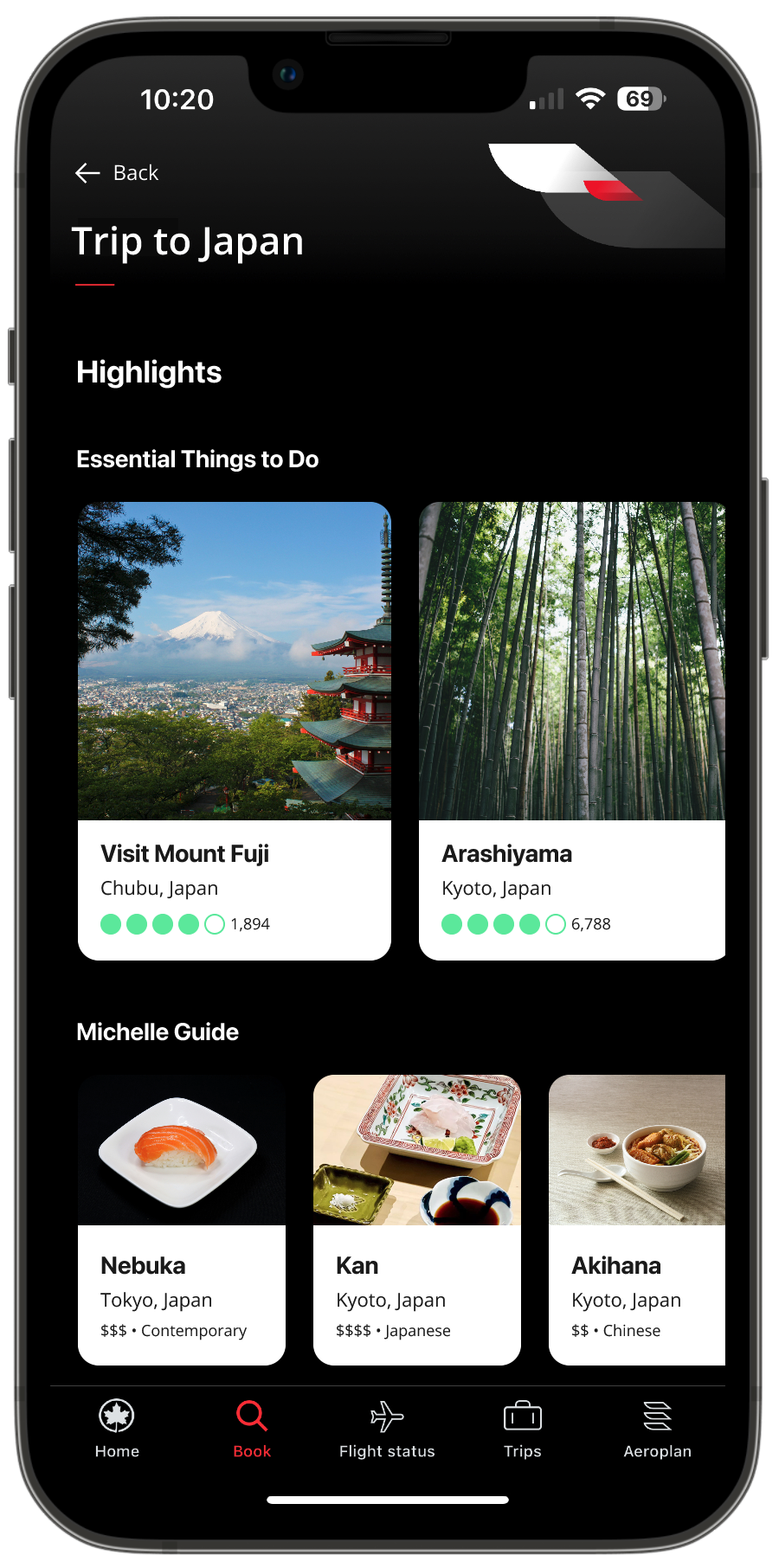
Additional value-based suggestions, comparisons, and “power up” permutations to ease the process of optimizing results
Design solution
Design solution
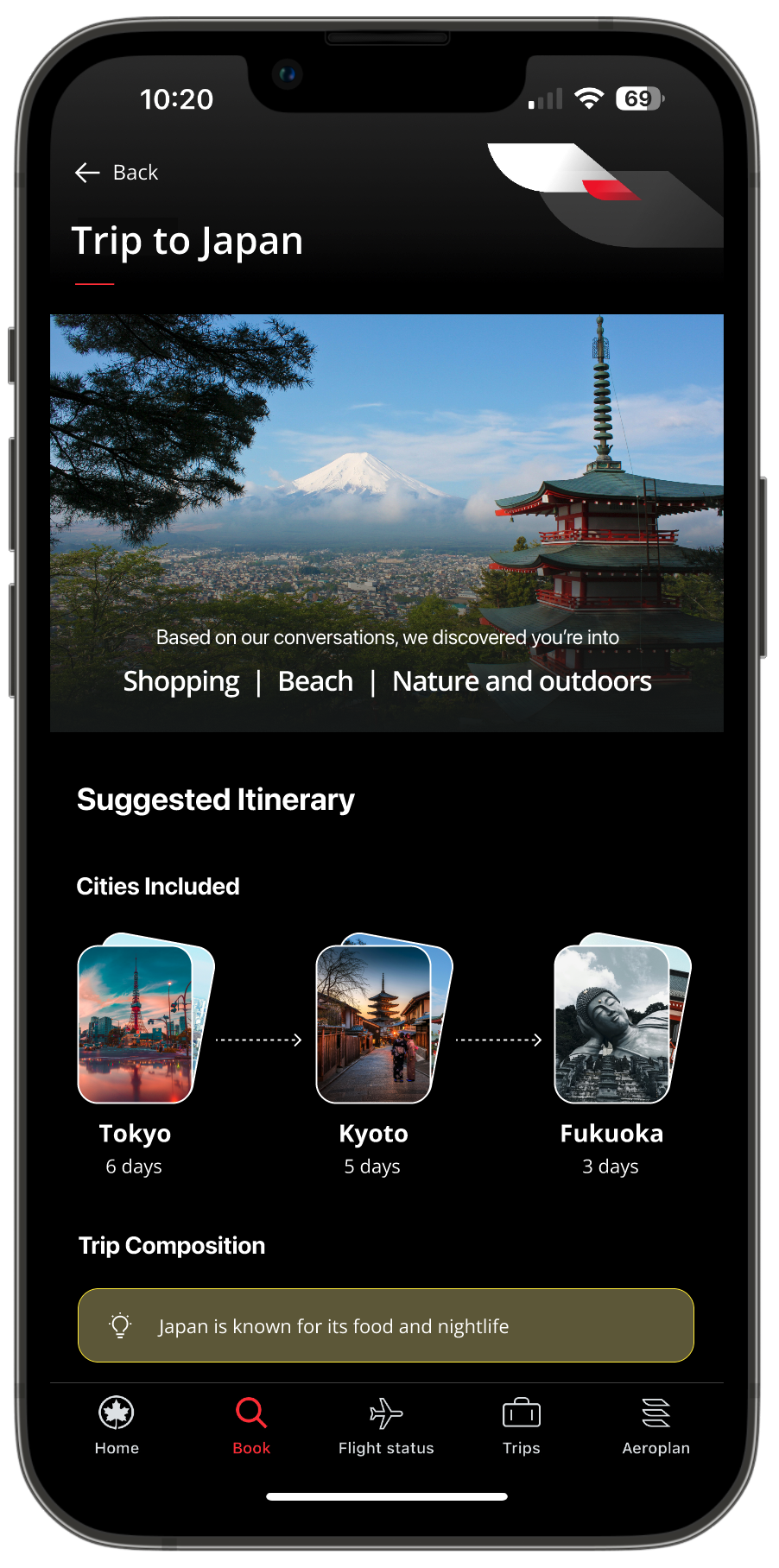
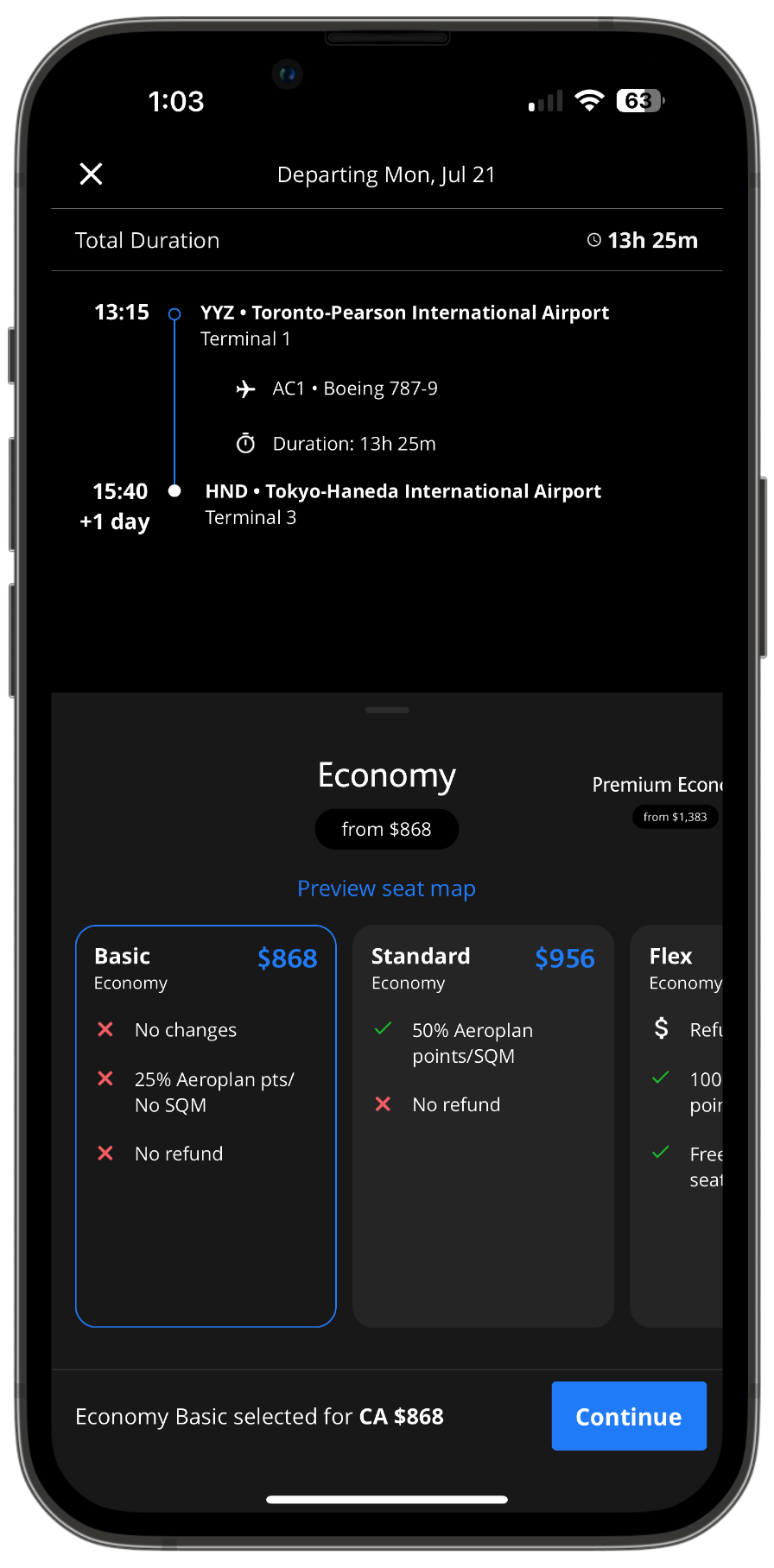
After re-evaluating the design test, we identified user needs and developed a conversational approach for our travel product. We created a profiling system and chatbot to match users with their preferred destinations and activities using machine learning.
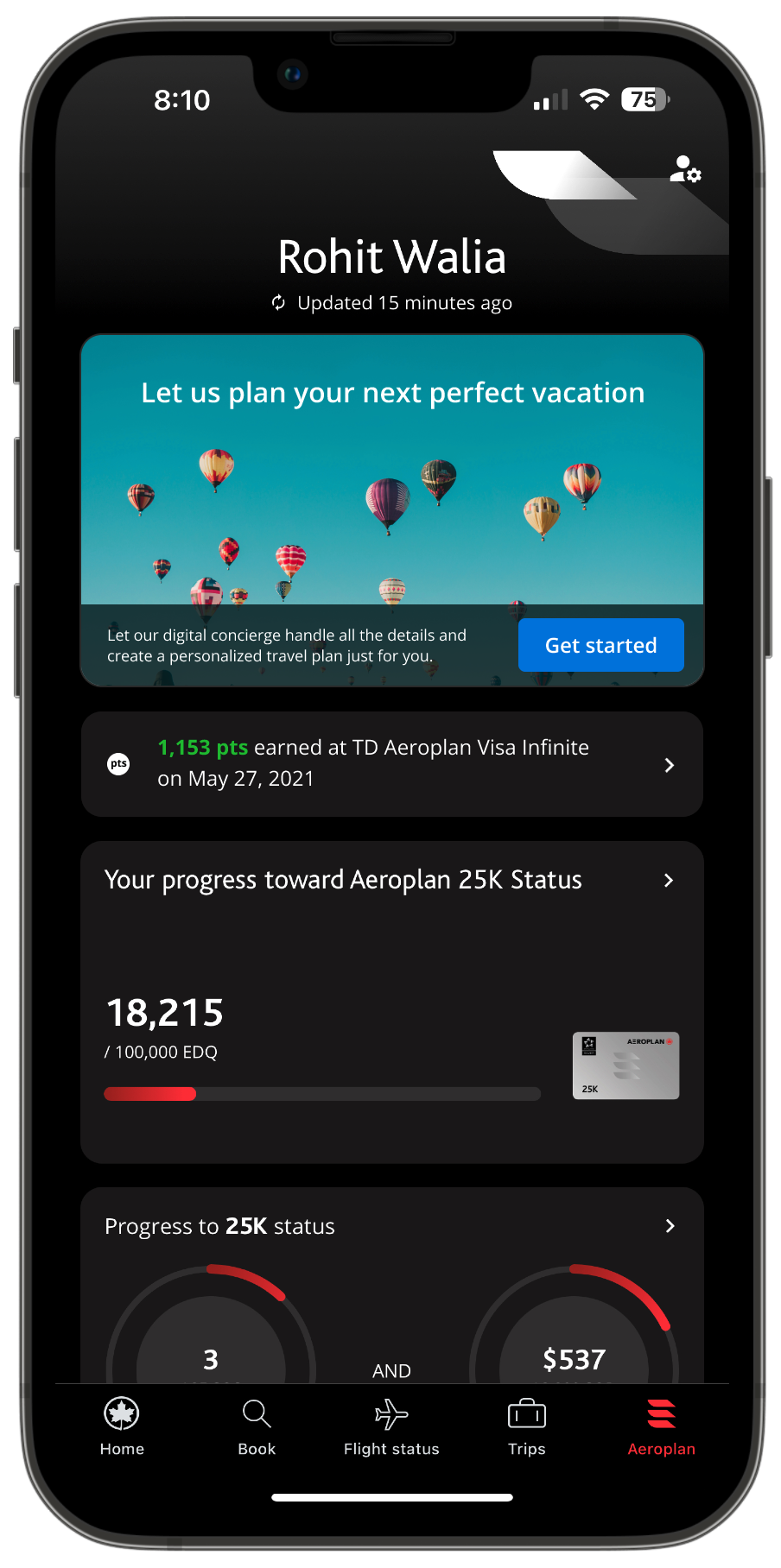
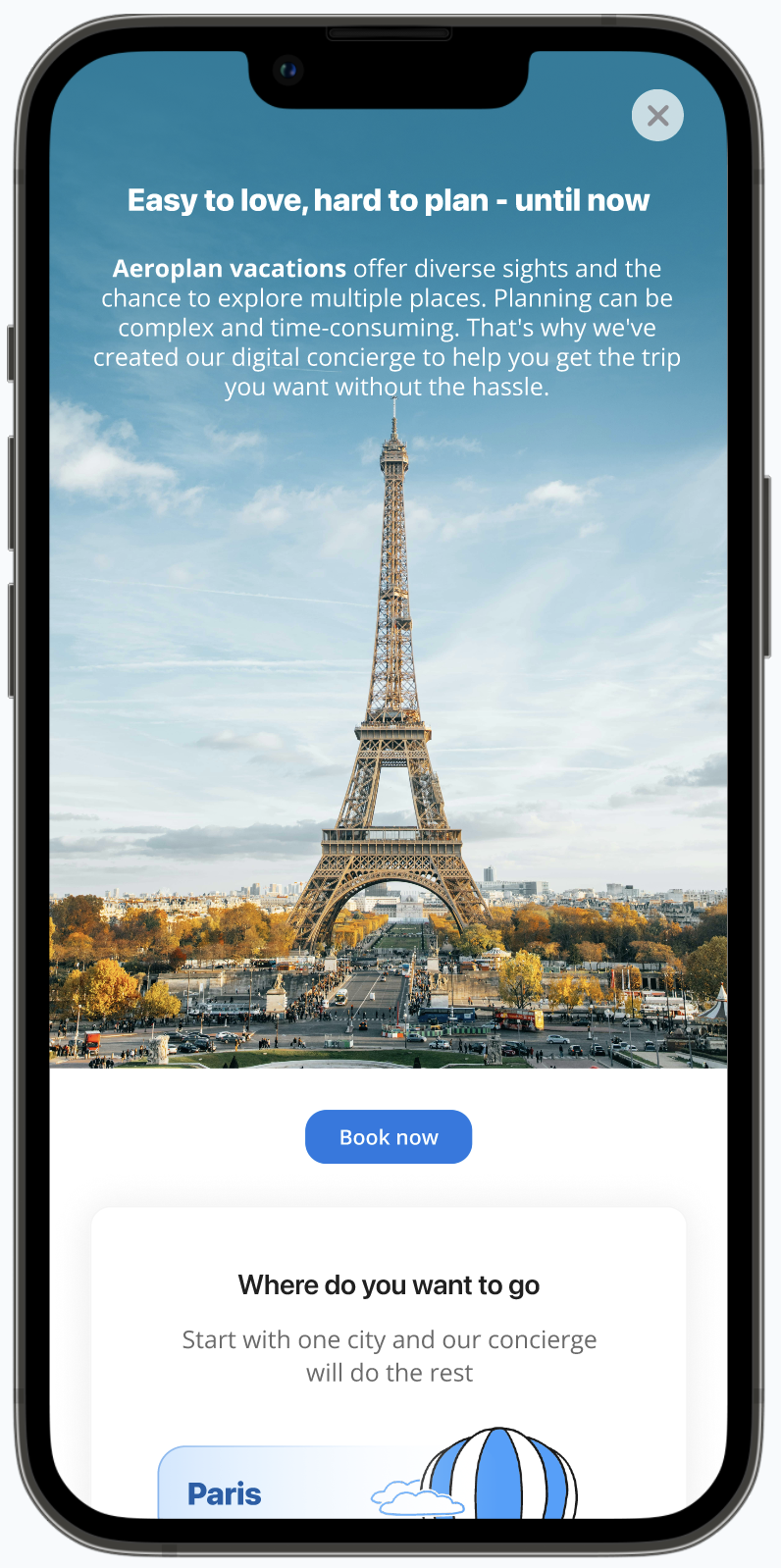
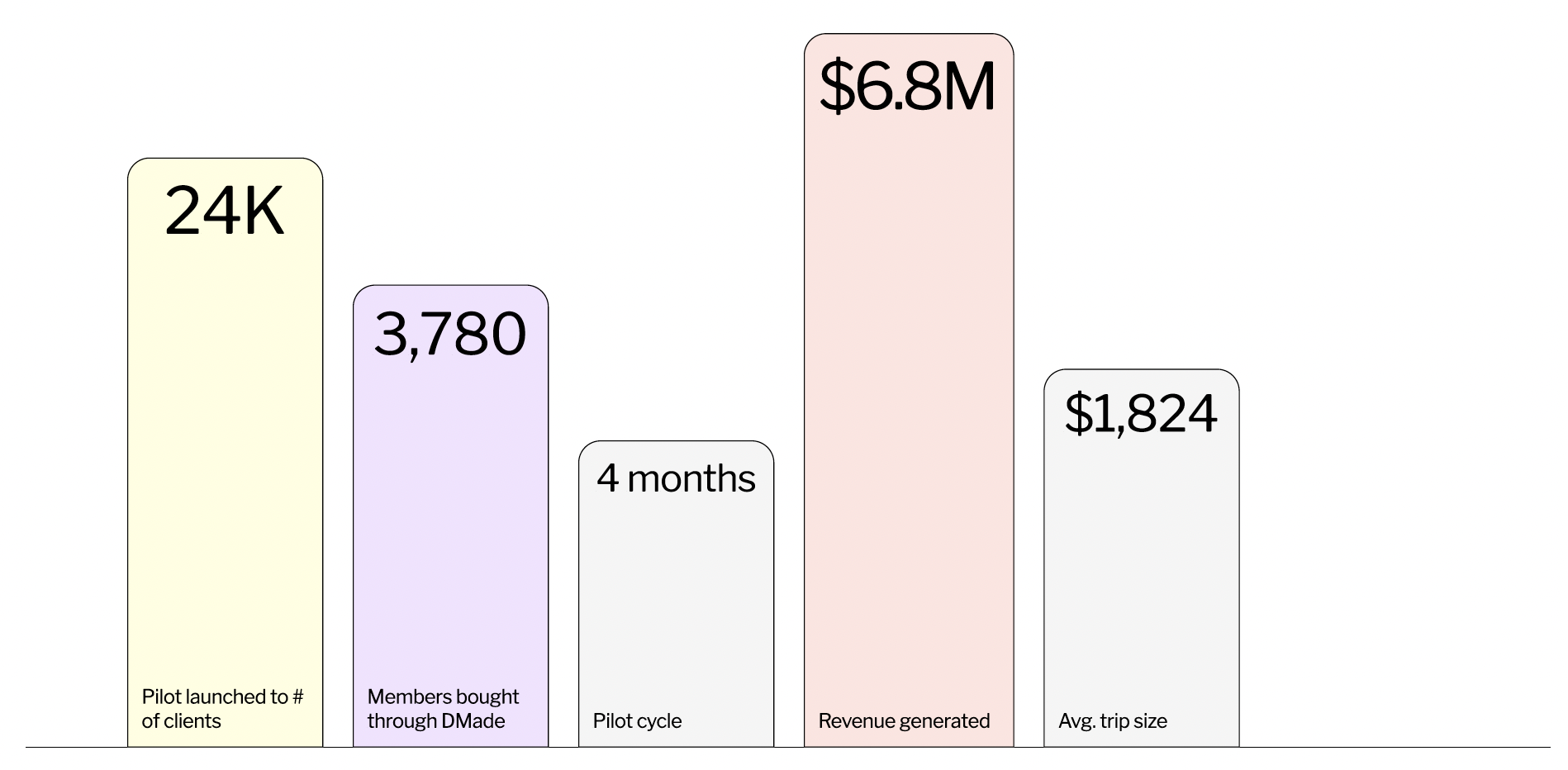
Product hand-off
After successfully testing it out in the market with a controlled group. We have received a positive feedback for this personalized product catering almost all travel needs of the users. Then it was handed over to the conventional product team to scale for the market.